About Me

Daniel 12:3-4 And they that be wise shall shine as the brightness of the firmament; and they that turn many to righteousness as the stars for ever and ever. But thou, O Daniel, shut up the words, and seal the book, even to the time of the end: many shall run to and fro, and knowledge shall be increased. Surely the Sovereign LORD does nothing without revealing his plan to his servants the prophets. Daniel 12:8-12 And I heard, but I understood not: then said I, O my Lord, what shall be the end of these things? And he said, Go thy way, Daniel: for the words are closed up and sealed till the time of the end. Many shall be purified, and made white, and tried; but the wicked shall do wickedly: and none of the wicked shall understand; but the wise shall understand. And from the time that the daily sacrifice shall be taken away, and the abomination that maketh desolate set up, there shall be a thousand two hundred and ninety days. Blessed is he that waiteth, and cometh to the thousand three hundred and five and thirty days.

Wednesday, August 31, 2016

Film Scriptwriting: Building the characters

http://www.filmscriptwriting.com/building-up-a-great-character/

BUILDING UP A GREAT CHARACTER

A good story needs a great cast of characters to be memorable. When you start your screenplay you need to think about the characters you are going to write about. There are ten things a character needs to be great. These all apply to main characters, villains, supporting characters and even minor characters. The ten keys to building a great character are:
  • A Goal And An Opposition
  • Motivation
  • A Backstory
  • A Point Of View And Attitude
  • Revealing Action
  • Growing Room
  • Plausibility
  • Details
  • Research
  • A Strong Supporting Cast
Lets look at each of these in detail.
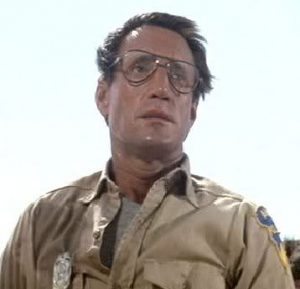
MartinBrody2A Goal And An Opposition
There is something that your character wants. The character’s goal should be specific and measurable. Seeking inner peace is not a measurable goal. Seeking the Presidency is a goal, you know when it has or has not been accomplished.
A good goal should be hard to achieve and worth fighting for. Nobody wants to watch a movie about a woman trying to find her spare set of keys. Whatever goal you choose for your character there also needs to be an opposition, an individual force trying to stop the character achieving the goal. That individual force should make the character sweat and work to achieve the goal, and face an inner fear.
Motivation
Now your character has a goal you need to ask yourself a question, why does the character want to achieve this goal? What is his motivation? The more personal the motivation the better. This is why there are so many movies where a character has their family kidnapped. There’s nothing more personal and motivating than that. A deeply personal motivation will allow the audience to relate to the character in your screenplay. This is how you create a relationship between the character and he audience.
A Backstory
The backstory is what happened to the characters before the movie began. Having a detailed backstory helps bring the characters to life rather than being instruments of telling the story. A character’s past should influence how they act and react to things. If their parents were involved in a messy divorce when they were young then they may be very wary of getting married themselves.
Backstory is a great example of the “show don’t tell” adage. Rather than have a dozen flashbacks try to bring out the backstory through the way the character acts, what they say and how they say it.
A Point Of View And An Attitude
Everyone has their own world view, attitude and thoughts and feelings. So should your character. These things are normally closely related to the character’s backstory. The backstory is the reason for the particular point of view and attitude the character has. A woman who has been cheated on by her last few boyfriends is likely, and acceptably, going to have a dim point of view towards men. Use the character’s backstory to create their point of view and attitudes.
Revealing Actions
Actions speak louder than words. You judge a character on the way they act, not on what they say or think. Imagine a character who dreams of committing murder every night, and is constantly thinking of ways to kill people…yet never does so because he realises it is wrong. Now imagine the opposite, a character who thinks and dreams of “normal things” yet one day, for no reason, goes out and knifes an innocent person to death. Who is the evil character?
Your characters (especially your main one) should always be willing to act, even if they don’t act in the way they directly think.
Growing Room
A “perfect” character is a boring character. They have everything they want and need so there’s no story to tell. Everyone knows someone whose life seems to go great beat for beat, you find yourself envious of them and willing them to fail. Instantly you should see from this that a good character should be imperfect. They have to be willing to try and change themselves for the better. Often they will try too hard and end up realising they were fine as they were, even if still aren’t perfect.
Plausibility
There’s a major difference between a character in a screenplay and a real life person. A character is single focused solely on attaining their goal while a real life person often have a lot of balls to juggle at once, causing a lack of focus. However you can make your character more plausible in a number of ways.
A character should have human emotions. If they stand there stone faced as the world is destroyed then they aren’t human, they’re a robotic character. Let them recoil in terror, or scream in anger. Let them react to situations the way a real human would. Remember though that humans often fight their emotions or try to hide them, but they still seep through.
They also need to have human traits and values. Your character could be a mean old grouch amongst those he works with yet have a heart of gold when with his family. This doesn’t mean the character is schizophrenic, just that he hates work and loves spending time with his family. Every character has a dark side and a good side. Even the “bad guy” has a glimmer of hope inside, even if its just the way he treats his plants. Plausibility means shades of grey, not blank and white.
Details
Details are the little things that make up life. They are the mannerisms, quirks, habits, idiosyncrasies and imperfections that make a character human. Along your way through life you pick up some very unusual traits. If you’ve seen Stranger Than Fiction you might remember that Harold Crick (Will Ferrell) brushed each of his thirty-two teeth seventy-six times. Everyone has something peculiar about them, you need to bring out those small details in your character.
Research
To create a great character for your screenplay you need to put time and care into them. This means a lot of research. There are two types of research. One is general research, the other is specific research.
A Strong Supporting Cast
One great character does not make a strong cast. You can have the most interesting character in the ever thought up but if they have no-one else with any depth to play off then they’re dead in the water. You need to put just as much care into every character you create as your main one. Whenever you start a screenplay you want to create at least four rich characters so you have plenty of room for interplay. This makes writing dialogue so much easier.
Your characters should share similarities as well as contrasts that bind them together. Remember that every major character must have their own unique function that moves the story forward.
Build that character up, one brick at a time.

MAKING A MEMORABLE CHARACTER

It is important as a scriptwriter to come up with characters that are not only realistic and gripping but also fit the story you are trying to tell. The most important of these two considerations is that the character fit in with the plot. You need to create a character that will deeply care and react to whatever event is happening around them. If your character cares about what happens around them it makes it so much easier to get the audience to care about them.
When to begin to create a character, especially a major one, you normally begin with a couple of personality traits and a vague idea of what they look like. The more visual and audio media you listen to the easier it is to have that spark of an idea to make a memorable character. You just need the right voice, line of dialogue, look or goal to get that initial idea. Once you have that initial idea you need to grab it by the throat and shake as much detail as you can out of it.
Try to draw out this initial idea now and create an image of this character in your head.
  • Are they male or female?
  • How old are they?
  • What type of clothes do they wear?
  • How do they style their hair?
  • Do they wear glasses?
Now you have a visual image of your character you need to explore the background of the character.
  • What was their childhood like?
  • Do they have a family now?
  • What kind of people do they befriend?
  • What is their profession?
  • Do they carry anything around with them?
  • Where is their home?
  • What do they own?
Once you have figured all this out you have a nice skeleton of a character. You have all the information you need of this character to write about them. However if you delve a little deeper you can create a truly memorable character for your screenplay.
Think about what it is that makes this character unique from other characters which might share similarities. Come up with a single sentence description of the character which captures their essence and personality. This sentence should capture the character in such a way that the reader will instantly understand them. Columbo is the scruffy, bumbling detective with a sharp mind.
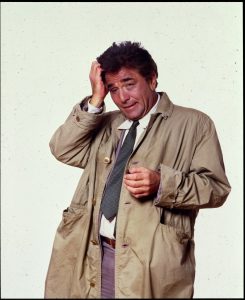
columbo1-837x1024While you come up with this sentence you may also want to name your character. By now you should have a good idea who the character is and what they stand for. Try to create a name which represents the character without sounding cliché. Lt. Columbo is a great name for the character. Straight away you know his rank within the police force, while Columbo is a step away from Columbus, a man famed for thediscovery of America. You might also note that Columbo never gave a first name, adding to his mystery.
You can still delve even deeper into your character. Take the role of interviewer for a lifestyle magazine. Ask your character interesting questions, sometimes the answers might surprise you. Whenever you come across a surprising answer or loose thread question them further on it. Let the character speak for themselves, let the words flow through your fingers. Take everything you know about the character and take the role yourself.
Once you get into the head of a character this way it becomes a lot easier to develop them to the point where they become completely real in your mind. This is a great thing. Now you can imagine how they act and react to their everyday activities. Think about them at their job, going shopping, amongst family, amongst friends and partaking in their hobbies. You will soon see the small personality changes that naturally happen depending on the situation the character is in.
You’ve created a great thing here, a character who is an individual. If you’re scriptwriting and come to a part of the plot where the character needs to do something which defies their core then you need to re-evaluate the plot or re-create the character. The best way of getting around this issue is to have an event earlier on in the screenplay which explains why the character might react in such a way that goes against what they stand for normally.
Whether the character you’ve created is likeable or not you have to learn to respect them. Treat them as the individuals they are. Respect their quirks and contradictions. Remember that the characters feelings and what happens around them means absolutely everything to them.

CHARACTER RELATIONSHIPS

Rarely does a character exist in their world alone. Even films with the central premise of lonliness have some form of relationships, such as “I, Legend” where Will Smith has his canine companion by his side. This is because it’s an awful lot easier to write a script containing lots of character interaction, it helps progress the story, develop characters and create conflict.
As the years have gone one relationships have become increasingly important in films. It seems like every other movie produced is heavily entrenched in the story of a friendship, sexual relationship or family dynamics. The reason for this is simple, we all know how relationships work, or perhaps more accurately, how they don’t work. The majority of the research is already done.
One of the most interesting insights character relationships offer is how character act differently around different characters. A character who appears to be highly successful and confident may turn into a tongue-tied, blithering idiot around the partner of their dreams. Sometimes the chemistry between two characters can strengthen one while weakening the other, sometimes it weakens both character while others both characters will be stronger for the relationship.
There are four basic elements that any relationship can have. If you are writing a script based on a relationship story you might want to create the foundation for the relationship first and then fit the individual character qualities around the relationship. Keep the following character relationship elements in mind:
  • 1. The characters have a common bond that both brings and keeps them together. This is most commonly seen in “cop movies” such as Lethal Weapon. While the characters may not like each other to begin with their occupation bond keeps them together until they grow to be friends. This is an example of character attraction, there has to be some reason the characters are together and stay together, especially if they don’t like each other to begin with.
  • 2. There is conflict between the characters. Perfect relationships don’t exist, at least not as featured in movies. While sweet it means there is no room in the story for progression in the relationship. Just as there is a bond that keeps characters together there should be some sort of conflict which threatens to pull the characters apart. This could be anything from a minor difference of opinion to an extra-marital affair. The conflict in relationships provides the drama, and possibly the comedy, of a screenplay.
  • 3. The characters have contrasting qualities. They can be total opposites which creates conflict yet strengthens the individual characters through challenges since they have a partner with different qualities to fall back on. Going back to “cop movies” how many times have we seen the uptight policeman who does things by the book with a renegade partner who goes by gut instincts? A lot. That’s because the two characters compliment each other well, they become a complete crime fighting machine while being seeped in conflict.
  • 4. The relationship could transform both characters – for better or worse. Towards the end of a movie you’ll find both characters in the relationship tend to morph, and become more like each other. Soon the renegade cop becomes a little more focus and less wild while the uptight cop loosens up and is willing to break a few rules.
Those four elements have to be there in a relationship to make it work and keep it interesting for story purposes. The attraction and conflict has to be balanced otherwise the relationship would become dull and stale or the conflict would push the characters completely apart.
One of the best ways to start writing strong relationships is to think of your own relationships. Pick one to start off with, maybe the relationship between you and your closest friend. Look at the four elements above and see what it is that keeps you close and what stops you being even closer. What qualities do you share and what qualities are contrasting? How have you both changed since you’ve become friends?
Do this for a few different relationships and you’ll soon see a pattern emerging. That’s when you start to get an “inside eye” for relationships which will help your scriptwriting greatly.
Now you know how relationships work try creating a new relationship with two fresh characters. This could be the basis for a million dollar script!

USING ADVERSITY TO DEVELOP CHARACTERS

There’s a secret in Hollywood. Luckily it’s not very well kept. The secret is that few stories are happy ones, albeit they often have happy endings. Insiders know that if you want to have a captivating story with well developed characters then you need a whole heap of adversity.

Imagine a screenplay telling the story of a couple of shopkeepers on an average day, with nothing going wrong. It’d make for a poor movie, wouldn’t it? That’s because any good movie is steeped in conflict and adversity. It is how the characters deal with the conflict and adversity that creates drama, action, comedy, romance and so on as well as the boatload of emotions associated with them. Adversity creates the story that you are trying to tell in your screenplay.

There are a number of different types of adversity you could use to create your story:

Physical
Physical adversity is illness, injury, death and the threat of each driving your character. Physical adversity is particularly prevalent in action and adventure movies. There is no greater adversity than being faced with your own death, or the death of a loved one.
Desire
All characters have wants and needs that are unfulfilled. Some desires are obvious and in plain sight, others are more hidden and subconscious. It is the unfulfilled desire that often drives the character throughout the screenplay.
Miscommunication and deception
Favored adversity of the screwball comedy is miscommunication and deception. Typically a character will either misunderstand or be lied to by another character, altering his world view into an incorrect one.
Displacement
Whenever a character is placed in an unfamiliar location or situation they are facing displacement adversity. The best example of a movie dealing with displacement would be Lost In Translation. Displacement can be big or small. It can be as big sending a character to a future time or as a small as a new friend being injected into a character’s clique.
Relationships
Relationships are everywhere. Every relationship you have probably has an interesting story to tell whether it be a family member, friend, work colleague or pet. Relationships are forged by characters going through adversity together. When there is adversity within the relationship a character must either change the relationship status, be changed by the relationship, accept the relationship or fight against the relationship.
While conflict drives the story forward the adversity drives the character development. However it is not the adversity that is so important, it’s how the character reacts deals with the adversity. If you create a character who has no worries, no stress and no problems then the reader will have no interest. And no interest means no purchase.
Using adversity to develop a character means exploring the character you’ve created. As the scriptwriter and creator you must find the way a character would react to a situation, and what it would take for that reaction to change. If a character makes the same decision, in the same situation, twice and it doesn’t work then your character hasn’t learned. For a character to develop they have to learn and improve themselves.
It’s natural for a viewer to imagine themselves dealing with adversity in a different way, but you need to convince them that you’ve captured exactly how that character would deal with that specific adversity.

To truly develop a character through adversity you need to:

Know your characters inside and out.
The more time you’ve spent creating your character and analyzing them the more you will know about them. The more you know about them the easier it becomes to work out their thought process. Once you know the character’s thought process you can work out exactly how they deal with whatever adversity comes there way. Bear in mind that a character will deal with relationship adversity differently than displacement adversity.
Choose how your characters will change and how they’ll stay the same.
As your story develops so will your character. You’ll want a few elements of their personality to change while others stay the same. You need to decide how your characters change and then come up with a reason why they change. This has an added bonus of allowing scenes in your screenplay to almost write themselves.
Mix and change things up.
As balanced as a person may be they will always have some contradictions within their personality. Blofeld was an evil villain hell bent on world domination and killing James Bond, yet he showed great love and affection towards his cat. Similarly you may have a character who appears calculating and ruthless becomes a softy at the sight of a baby. These contradictions add a whole new dimension to a character.
As a character grows you may find that you need to change events and situations in your screenplay so both the character and plot can develop further. Don’t worry. This is a very good sign, it shows that the main character has taken on a life of its own.
Finally I want you to remember that character growth and plot growth should be finely balanced, like the yin and yang of the screenplay. This way the audience will leave the movie having seen a memorable story with an unforgettable cast of characters.

Thursday, August 25, 2016

Screenplay Structure: Building Your Story From the Ground Up

Screenplay Structure: Building Your Story From the Ground Up

By Robert Gregory Browne

://www.movieoutline.com/articles/movie-screenplay-structure-building-your-story-from-the-ground-up.html

Structure is one of the most important parts of any story, whether it be for the screen or the page. This essay was originally written with screenplays in mind, but I approach my novels in the exact same way. Let me explain:

A friend of mine had a house built on the side of a hill in the Pacific Northwest. Beautiful view. At night, he’d stand on his deck and look out at the valley spilling out below him, moonlight reflected on the surface of the ocean beyond.
The house itself was a marvel of wood and glass and filled with just about any convenience you can think of, fully automated by a mainframe computer. People who visited usually stood around wide-eyed and slack-jawed, completely amazed by the place. It was that impressive.
A few months after he moved in, my friend was walking barefoot across his carpet when he noticed an odd bump in the floor. He explored it with his toes, then crouched down and ran his hands along the bump. Alarmed, he pulled the carpet back and felt his stomach clutch up when he discovered a crack in the foundation that ran the entire width of the house – a crack that literally split the place in half.
Frantic calls got him nowhere. He was told very matter-of-factly that the only way to fix it was to tear down the house and start from scratch with a new foundation. It turned out that the original contractor had used substandard cement that, coupled with a serious design flaw, couldn’t withstand the weight of the house. A week later, the storm of the decade washed half of it into the valley. Pieces of my friend’s dream were scattered from his perch on the mountainside all the way to the Pacific Ocean.
Despondent, my friend moved in with his parents while he contemplated what to do next. His father, a retired firefighter, said, “Can’t build a house without a solid foundation. Can’t have a solid foundation without a foolproof set of plans.”
And he was right. You can’t. And you shouldn’t.
When my friend told me what his father had said, it brought to mind something very similar that I (and many others) have been saying for years –- about writing, not houses. And if you’ve spent any amount of time trying to become a professional writer, you’ve heard it before:
Writing a story is like building a house. You can decorate it to your heart’s content, but without a solid foundation, it’s bound to fall apart.

WHAT STRUCTURE IS

When people ask writers what structure is, the most common response you hear is this: a beginning, middle and end.
Well, duh. Any moron knows that. We’ve all seen enough movies and read enough books to know that you’ve gotta start somewhere, end somewhere else and that a bunch of stuff has to happen in between. Otherwise what’s the point?
The trick is knowing where to start, where to end, and what to put in-between. If you’re laying a foundation with a faulty plan or substandard material, you’ll still have your beginning, middle and end, but there’s a pretty good chance that your story won’t stand up to much scrutiny.
Several years ago I read an article in Writer’s Digest by a writer named Gary Provost. Mr. Provost wisely compared a story to a basketball game, in which the players have an overall goal – to win the game. To reach that goal, they must face the challenge of several smaller goals, traveling from one end of the court to another in order to score baskets and, of course, to prevent the opposing team from scoring. All during the game, the two teams have conflicting goals and will do anything they can to stop the other from succeeding.
Mr. Provost was, I believe, trying to describe the nature of conflict in storytelling, and he did it in a way that not only tells us about conflict, but about structure as well. The two are so closely intertwined that it would be difficult not to discuss them both in the same breath.
Structure is a series of goals that lead to an overall goal. You can’t have your players wandering around for no reason. They have to have a purpose in life. They have to know what their objectives are and must be willing to fight (conflict) to reach those objectives.

A MAN WITH A PURPOSE

Let’s look for a moment at the movie, The Fugitive. While not a perfect action-thriller, it comes pretty close, especially in terms of structure.
It opens with a woman being killed. Her husband, a prominent doctor, is arrested and convicted for her murder, but he’s an innocent man. The real killer is a one-armed man, with whom he fought at the crime scene.
On the way to prison, there’s a terrible bus crash and the doctor escapes. Seizing this opportunity, he begins his quest to clear his name. And the only way to do this is to find the one-armed man.
This setup is the “beginning” of the story. Act One. It defines the main character, his situation and his overall goal, to find the real killer. Not only is this the character’s overall goal, it was the writer’s overall goal as well. It was the writer’s job to figure a way to get his hero to this goal in a dramatically compelling way. Not an easy task.
To accomplish that, the writer had to structure a series of sub-goals (think basketball) that would eventually lead his hero to the end of the game. Conflict helped him do that.
Let’s break it down:
In Act One of The Fugitive, what’s the first sub-goal? Not the hero’s goal, but writer’s.
Stuck? I’ll give you a hint: to get Dr. Kimble arrested. Plain and simple.
Kimble’s wife is killed, he fights with the one-armed man, the one-armed man escapes and Kimble is left behind with no alibi and blood on his clothes. The next thing he knows he’s arrested for murder.
In the process of setting up the character’s main objective, the writer uses this smaller goal as a kind of navigating point. The first act is a series of these navigating points, and by breaking the act down in this way, the writer is able to execute his story in more manageable chunks.
The second sub-goal in Act One is to get Kimble convicted of the murder, followed by a third, and slightly bigger goal (turning point) — the bus crash and escape that end the act and allow the hero to begin his quest toward his overall objective.

GOALS, GOALS AND MORE GOALS

The part of the story that usually makes or breaks the writer is the “middle” part, or Act Two. This act is commonly known as the confrontation act, and carries the bulk of the story. Again, like Mr. Provost’s basketball game, Act Two is filled with many sub-goals and, hopefully, a formidable force to keep the hero from reaching those goals.
In The Fugitive, Kimble has escaped in Act One, but Act Two brings him a whole new series of problems. His immediate objective is to get to safety and to take care of a gash in his side caused by the bus wreck. He runs through the woods in his prison garb, exchanges it for a truck driver’s overalls, then sneaks into the nearest hospital and tends to the wound.
These scenes are filled with conflict because Kimble is being pursued at the time by a new character the writer has introduced — Kimble’s nemesis, U.S. Marshall Sam Gerard, a hard-assed fugitive hunter. Gerard’s overall goal is to bring his man in. He’s the opposing team, trying to score those baskets and win the game.
So in Act Two, the first sub-goal is getting Kimble to the hospital. This sub-goal was created by conflict – the bus crash, gash and police pursuit — as Kimble reacts to and battles against it.
This, in turn, leads to yet another sub-goal or navigating point: the first confrontation between Kimble and Gerard. At the hospital, Kimble steals an ambulance, gets cornered by Gerard in a viaduct and jumps to certain death in order to escape. Again, by using this first confrontation as a navigating point and writing toward it, the writer was better able to manage his story.
Since we’re limited by space here, rather than continue through the story scene by scene, let’s look at some of the sub-goal/navigating points that helped the writer make it through Act Two:

Kimble survives the jump and heads back to Chicago.

He contacts a colleague, who helps him with money.
He goes to the prosthetic ward of a Chicago hospital and gets a list of one-armed men.
He calls several of the men, narrows down the list, and discovers one is in prison.
He goes to the prison, discovers it’s the wrong guy, but is confronted by Gerard and must escape.
He breaks into the one-armed man’s apartment, finds photos and evidence that raise questions about a drug Kimble’s own hospital had been testing, a drug Kimble knew was defective.
He goes to his hospital to investigate and discovers his colleague is behind his wife’s murder – with Kimble the intended target.
Each of these is a sub-goal/navigating point that helps the writer build his story. Moving parallel to this are a series of goals involving the Gerard character. By moving from one to the next, the writer is able to build a series of sequences, each affected by one preceding it.
By going beyond the simple “beginning, middle and end” and structuring your own story this way, your foundation becomes as solid as a rock, and the process is much easier to handle.
Like those before it, Act Three, the resolution, will have its own navigating points, the biggest of all being the hero’s success or failure to achieve his overall goal.
Have your eyes glazed over yet?
Hey, nobody said writing a screenplay is easy.

AH, BUT IT DOESN’T STOP THERE

Structure doesn’t end with these navigating points. When we break our story down further, each scene should have a goal and a structure of its own.
That’s right. In a well-written screenplay, each scene has it’s own setup, confrontation and resolution. These elements may not be as fully formed as they are in the overall script, but they’re there. I urge you to take a very close look at any well-written movie and see for yourself.
But don’t strain yourself too hard. There’s such a thing as overkill...

ARISTOTLE’S MODEL AND THE WHAMMY BOYS

Listen to new writers talk about structure, and it’s fairly obvious they’ve been listening to blow hards like me who insist that each story is comprised of three acts and that each act contains an approximate number of pages with a couple of turning points along the way.
Aristotle wasn’t an idiot, and based on my observations over the years, I’d say his model holds up pretty well. Even so-called five act stories are really three-act stories in disguise. And on closer scrutiny, even the infamous Pulp Fiction with its “revolutionary” time shifts follows Aristotle’s model.
Trust me, it’s true.
So it’s probably a good idea to have that model in the back of your mind when you write your novel or screenplay. After enough reading and writing and movie-watching, the three-act structure becomes ingrained in our system. So ingrained that we often forget it’s there.
When you’re at that point, a good way to approach structure is to design your story so that it loosely follows Larry Gordon and Joel Silver’s whammy chart, which, boiled down, goes like this:
Something must happen every ten minutes or so.
That something doesn’t necessarily have to be a shot of action as Gordon and Silver insist (hey, maybe you’re writing a love story), but it should be something compelling.
In other words, when you structure your story, take those sub-goal/navigating points I’ve been blathering on about and spread them out across the landscape of your screenplay so that each of them falls every ten minutes or so. Put a couple of the larger ones at the end of Act One and Two and you’ll do okay.
This isn’t as formulaic as it sounds. Really. In fact, I think as you work out your story you’ll be surprised to discover that these navigating points often take care of themselves in a very natural, intuitive way.

THE LONG AND WINDING ROAD

Anybody confused? I hope not. For those of you who are, simply think of what it’s like to drive across country. It would be impossible take the trip in one long haul, never stopping to rest and refuel. Before we get started, most of us pull out the map and mark our route and, to carry an analogy way too far, lay the foundation for our trip. We know exactly where we’re going and how to get there, but we’re always looking for places to stop along the way to make the trip a more pleasant experience.
So, go on, get out of here. Get your map, mark your route, and start driving.
And whatever you do, don’t get lost.

About Robert Gregory Browne

Robert Gregory Browne is an AMPAS Nicholl Award-winning screenwriter and novelist, the author of four thrillers with a supernatural twist published in the US, UK, Germany, Russia, Bulgaria and Denmark, and has a story in Lee Child’s crime fiction anthology, KILLER YEAR: Stories to Die For. That story was optioned for television, as was his first book, KISS HER GOODBYE. He’s a member of ITW and is a regular columnist for the Anthony Award nominated writer’s blog, Murderati. He’s currently at work on his fifth novel, PARADISE CITY, for Dutton books.

Save the Cat- Monster Inc

Friday, August 19, 2016

The 3 Types of Character Arc – Change, Growth and Fall


The 3 Types of Character Arc – Change, Growth and Fall


The main reason I disagree with people who claim every story fits the hero’s journey, is that it’s not the only character arc out there, and it reallydoesn’t fit every story. While I wasn’t sure why exactly my story doesn’t fit the description when I wrote the post on The Hero’s Journey – My Pros and Cons, my late yet intense study of Story Structure made things muchclearer to me. So I’m excited to share my conclusions with you!
Character arcs. A character starts out as some guy, then stuff happens and he does some pretty crazy shit, which in turn changes who he is so he becomes a different guy. The end.
In all honesty, character arcs are so easy to explain because we’ve all experienced them. None of us is still the person we were with three years of age, or thirteen, or thirty. We all change, some for the better, some for the worse, and some change sideways. Hey, it’s alright, as long as we move on. It’s the same with characters, they move on as the story progresses, but the WAY in which they move on usually falls into one of three major categories.
Here be definitions.
*clears throat*
The Change Arc — this is our good old “hero’s journey”, which basically has the protagonist change from an unlikely fellow into a savior and hero. This transformation is quite radical, and despite some inner strength that was “always within him”, pretty much all else about the protagonist changes drastically by the end of the story.
The Growth Arc — in this character arc, the protagonist overcomes an internal opposition (weakness, fear, the past etc.) while he faces an external opposition, and as a result he becomes a fuller, better person. He’s still pretty much who he was, just upgraded to Protagonist 2.0.
A common yet often overlooked variant of the Growth Arc is The Shift Arc — here, the protagonist changes his perspective, learns differentskills, or gains a different role. The end-result is not “better” or more than the starting point, just different. The protagonist has not overcome a grand inner resistence or anything, he simply gained a new set of skills or assumed a new position, maybe discovered a talent he forgot he had, or a different vocation.
The Fall Arc — commonly known as a “tragedy”, the Fall Arc follows the protagonist as he dooms himself and/or others, and declines into insanity, immorality or death.
That’s it, three very different character arcs. And before anyone starts on semantics, yeah, I know growth implies change and change implies growth and bla-be-di-bla-blah. The point is to understand the different degrees and types of personal change, not to find out who’s vocabulary is bigger and harder, right? 😉
So we’ve got three major types of character arcs. How come so many people confuse them all for the “hero’s journey”? Well, I think it’s because the hero’s journey shows the most dramatic character change, and it’s the most common. It’s fairly easy to mistake it’s structure for THE character arc structure, instead of recognizing that it simply shares the same basic elements of character-driven story structure with other types of character arcs. It’s the story structure beneath it that’s universal, not the “hero’s journey” itself.
*sips some water*
*chokes on it and looks like a dork*
So which type of character arc should we pick for our story? That’s also easy to find out. All we have to do is to answer two questions:
1. What do we want our character to be like when the story reaches its glorious conclusion?
2. What do we want our character to start out as?
par example — If we want him to become the leader of a group of people, and we want him to start out as just any other member of that group, then we’re writing a Change Arc (everything else will fall flat and fail to make the ending believable).
But if he starts out as the leader of a rivaling group of people, then we have three possibilities:
– a Growth Arc if the rivaling group are the “bad guys” and our protagonist learns the error of his ways;
– a Shift Arc if the rivaling group are also “good guys” but with opposing interests;
– and a Fall Arc if the rivaling group are the actual “good guys” and our protagonist ends up leading the powers of darkness.
Knowing where we want our character to be at the resolution of the story, and knowing how they start out, gives us the kind of character arc we will need to develop. That’s important, because knowing what that arc is early on, will help us figure out what kind of scenes to write, what their impact will have to be on the character and what types of decisions they will have to make along the way. Not in detail, not exactly what they will decide and do, but what kind of personal attitude and strength (or weakness) they must bring to the table in which part of the story.
Okay.
Now we know the starting point of our character and who we want them to be when the story reaches its finale. What we also need to know is the basic story structure that lives underneath every coherent, successful story. If you’ve read Larry Brooks’ awesome writing advice, heard Dan Wells’ funny lecture, or read Les Edgerton’s brilliant insights, then you know where I’m headed. If not, here’s my very quick definition of story structure, mixing these three perspectives with my own:
1. Set up
– showing the protagonist in his accustomed environment or role
– inciting incident — something stirs the waters, creates a surface problem to be solved, or promises trouble in the future
– first plot point — the true story problem is revealed, the core conflict that drives the story; everything changes from now on, it’s a point of no return
2. Reaction
– the protagonist refuses to face his new problem or pursue the new goal; he reacts to the change with denial, refusal or flight
– first pinch point — pinch points are used to create tension and apply pressure to the protagonist; the first pinch point is usually where the antagonist is revealed, or the gravity of the new situation is made clear
– mid-point — a critical piece of information is introduced which changes everything again — the protagonist’s (and readers’) understanding of the nature of the problem is altered; also, the protagonist decides he must stop running and act
3. Attack
– the protagonist becomes proactive, and starts to attack the villain or tackle his problem; however, he fails or worsens the situation (try/fail cycles that increase tension)
– second pinch point — the antagonist (or opposing force) reveals their full strength, and all seems hopeless and lost; the protagonist reaches his lowest point
– second plot point — the last piece of critical information is introduced, and now the protagonist understands how to defeat the antagonist, or what to do in order to solve his problem (it can be an external piece of the puzzle, or the realization that the “power is within him”)
4. Resolution
– everything we’ve set in motion comes together now; no new information or characters are introduced
– climax — the actual show-down between protagonist and antagonist (or opposing force), in which the story promise is fulfilled (more on that in a future post)
– denouement — the protagonist assumes his new position, and major loose ends are tied up; also, if need be, the hook for the sequel is introduced or hinted at
All clear?
So how does story structure look when it comes to the different types of character arc?

The Change Arc Story Structure

1. Setup
Old order: the protagonist in his natural environment, with his old role and familiar problems; usually the opposite of what he will end up.
– inciting incident = the hero is ripped out of his normal life and environment by a change
– first plot point = the hero learns or decides he must embark on a new journey
2. Reaction
– first pinch point = the nature of the opposing force is revealed; the hero reacts (flees, hides, refuses to take responsibility, tries to escape or break-off the journey, etc.)
– mid-point = something happens which makes the hero realize he must assume his new role and grow into it, and take the fight to the villain
3. Attack
– second pinch point = the villain gains the upper hand (either the hero’s allies fall to the villain, or the villain is shown in full strength, dominating the field); it seems as though the hero has no chance, and he reaches his lowest point
– second plot point = the last piece of information is delivered or discovered, and now the hero knows exactly how to defeat the villain; by this point he has also grown into his new role, and can use his new skills
4. Resolution
– climax = show-down between hero and villain, where the hero uses all he’s learned, and even more (a daring move, a genius tactic, or simply a previously untried combination of skills) to emerge victorious
– denouement = the hero returns to his old environment as a new person, and is now accepted and praised for his new role.
Sounds very familiar, right?
Now here’s the structure of a Growth or Shift character arc. Either one is frequently found in romance novels, thrillers, horror, adventure, even science-fiction.

The Growth & Shift Arc Story Structure

1. Setup
Old order: the protagonist is pursuing some semi-interesting goal that he thinks is the most important thing for him; or he’s just going about his merry life
– inciting incident = a change happens, which hints that what he thinks he wants (his old goal) might not be what he should be pursuing, or not what he really needs; or he meets someone who makes him question his perspective on things. Note: in Growth & Shift arcs, the inciting incident is usually very subtle, and in fast-paced thrillers it can even coincide with the first plot point
– first plot point = the protagonist does something that sets him on an entirely different path (can be a perceived mistake, a misunderstanding, etc.); or something happens to the protagonist that forces him to change his direction, and he sets a new goal; or he is simply given the opportunity to do something that has nothing to do with his old goal, but which turns out to be just the challenge he needs to get out of his rut
2. Reaction
– first pinch point = the new path brings only trouble to the protagonist, and he tries to drop the new goal, flee from the new problem, force his way back into his old life, or simply tackle it the way he’s always tackled things in his life (it obviously needs to fail); the first pinch point is the moment the protagonist meets true opposition, hardship or failure
– mid-point = a crucial piece of information is revealed that changes the protagonist’s perspective on the whole situation, and thus his understanding and his tactics; it can be the transition from reaction to action, or simply a radical change of approach in fixing the problem he’s facing
3. Attack
– second pinch point = the protagonist’s first attempt to do things right this time, but he screws things up even more; or the opposing force (must not always be a “bad guy”, it can be an abstract problem, a mystery, the odds mounting against the couple coming together, whatever) pulls the rug from under the protagonist’s feet leaving him hopeless and devastated
– second plot point = the last bit of information is discovered (or the last straw falls on the camel’s back), that helps the protagonist take the difficult decision or make the right move to reach his goal
4. Resolution
– climax = the protagonist faces his problem head-on, and succeeds
– denouement = the protagonist gets to fully enjoy the fruits of his hard work (gets the love of his life, defeats the mafia, etc.)
And finally, we have the structure of the Fall character arc, commonly known as a tragedy in literary circles.

The Fall Arc Story Structure

1. Setup
Old order: protagonist is happy, safe and fulfilled
– inciting incident = something interferes with the protagonist’s happiness; this can either be a suspicion, the past coming to haunt him, a new person interfering with his life, etc.
– first plot point = the moment when the new disturbance causes old personal demons to show their ugly faces, or when it directly endangers the protagonist’s way of life; from now on, it’s clear that not all is well in paradise, and that something must be done
2. Reaction
– first pinch point = because Fall character arcs typically have an internal plot (even if it’s garnished with external conflicts and transitory antagonists), the first pinch point is the moment when the protagonist finds the first undoubtable evidence that something is wrong with him, with someone close to him, or with everyone else (humanity, the world, etc.)
– mid-point = the protagonist confronts his suspicions or the person he believes to be the cause of the disturbances, and realizes the situation is much worse than expected; this can take many shapes, from confronting a suspected loved one for having an affair, or confronting the shady coworker for conspiring against him, down to confronting imagined (or delusion-induced) antagonists in unfavorable circumstances, which only lead to the protagonist becoming convinced of an even greater evil going on
3. Attack
– second pinch point = this is where the protagonist does the first truly horrendous thing (to protect himself or others); it’s a point of no return for him in his transition from normalcy to despair, decay or immorality. Instead of an outside antagonist proving his power, we have the protagonist do something that would have previously been considered uncharacteristic, something born out of fear, jealousy, hatred or delusion, which will set the avalanche of character failure in motion
– second plot point = the last piece of critical information comes into play, and it devastates the protagonist; it can be proof that he was wrong the entire time but now it’s too late to make good on his actions, or it can be the last piece of the puzzle he’s trying to solve which reveals the only possible action left to take — and it’s not a positive one
4. Resolution
– climax = the protagonist takes that final action which seals the deal; he dies, kills someone, loses his sanity, dooms a great number of people, or something equally tragic
– denouement = if there even is a denouement (in case the protagonist dies, especially if he’s also the narrator, then the story ends at the climax); now the protagonist is shown in the new context, doomed by suffering or displaying the characteristics of a villain

That’s about it. Three different types of character arcs, all based on the same underlying story structure.
In the case of my story—which I’m currently reworking on a “detailed outline” level (to give you awesomely supportive guys a little update)—the protagonist follows a Growth Arc. She does not change fundamentally as the story progresses, but she changes her role and defeats internal opposition as she faces external odds. She evolves and grows, but she doesn’t become a hero, savior, role model or anything like that. It’s most definitely not a hero’s journey, but it definitely is a character arc with all the necessary elements that show innner conflict and change. I bet if you haven’t written such a story, you can at least think of one you’ve read, which has a strong character arc but no “journey” to heroism. Right?
Oh, and one more important thing.
I strongly believe there are no laws in fiction, only guidelines. There are exceptions to every rule, black sheep in every herd and a genius in every generation. But I think it’s safer—for me—to assume that I am not the exception, the black sheep or genius among all others, until actual real experience proves otherwise. I find it better to start out following a proven structure, and try to shine with my concept and characters, than to break rules haphazardly in hopes of creating something unique.
We need to take a good look at the needs of our individual stories andrespect them, not force them into a mold or experiment on them like we’re Mengele’s apprentices. 😉
So what type of character arc have you written in your latest story? I’m curious!